The Golf Course's Worn-Out Pipes May Decide Park Meadows' Ski Winters
October 22, 2026
October 22, 2026
Last winter, White Pine Touring's Nordic trails on the Park City Golf Club were open for 38 days. The season before, they were open for about 130. Meanwhile, the irrigation system under the same fairways has reached the end of its useful life, and the city is weighing a multimillion-dollar plan to replace it. Those two facts met at a City Council work session on September 17. Several council members made it clear they don't want the ground torn up for new sprinkler lines without also deciding whether the course should be able to make snow.
The course that borders Park Meadows is a golf course for half the year and a cross-country ski network for the other half. After that meeting, the question of whether its winters can rely on snow is part of the irrigation decision.
The Park Record's account of the 2025-26 season reads like a list of false starts. The Nordic center shop opened at the end of November. The course opened briefly at the start of December and closed four days later when temperatures rose. It reopened in early January, and cold weather allowed several weeks of grooming and lessons. Then a warm stretch closed it again through much of February. A storm on February 17 brought it back for a short run before rain and warmth ended the season in late February, weeks earlier than usual.
Richard Hodges, director of the White Pine Touring Nordic Center, described the end of the season to the Park Record:
"The cruelness of this winter has just continued. We had the final storm and we had three days of some of the best skiing of the year, and then it was 60 degrees again."
The same article explained how the weather reached White Pine's winter staff of instructors, groomers, retail workers and tuning technicians. In Hodges' words, "When we groomed, the groomers worked. When we didn't groom, the groomers didn't work." By March 9, the only snow on the golf course was in the shade of the pine trees.
At this site, a winter's quality depends entirely on how much natural snow falls on open fairways. That's the background to everything said at City Hall six months later.
The golf course master plan, drafted with golf course architects Beddo & Boyden, began as a golf question. According to the official minutes of the September 17, 2026 meeting, course manager Vaughn Robinson told the council that irrigation was the top priority among the study's recommendations. Tony Larsen of the Golf Department said some lines had "exploded" and leaks took a long time to find.
The full plan goes well beyond pipe. It would reconstruct all 18 putting greens, renovate tees and bunkers, adjust fairways and roughs, improve drainage and cart paths, and build an expanded short-game area. It would also, in the minutes' words, "continue to accommodate winter Nordic operations." The draft keeps the course's established routing. The most visible changes would be a relocated first tee and green, a ninth hole shifted north, and redesigned sections around holes 10 through 13.
The numbers are what turned this into a larger conversation. The city's staff report estimated the irrigation construction alone at $5.12 million to $6.045 million, and the total project at about $15 million spread across fiscal years 2027 through 2029. Budget Director Todd Darrington said that was double what had been budgeted. Council Member Ciraco pointed out that golf runs as an enterprise fund, meaning it has to pay its own way. Robinson estimated a 60% drop in golf revenue during construction.
A project that size, with the whole course being dug up anyway, is where snowmaking came up.
Council Member Parigian asked about snowmaking for the Nordic track. Robinson estimated it would cost $3 million to lay separate water lines for Nordic skiing. Before the meeting, KPCW reported that the City Manager had said any snowmaking system would need its own lines, though the trenching work might be shared.
Shared trenching is why the timing matters. Snowmaking lines need their own pipe, but they could go into the ground during the same excavation as the new irrigation. Doing that later would mean digging up the fairways a second time.
Several council members said so directly, according to the minutes. Council Member Miller wanted to "incorporate the snowmaking ability." Council Member Toly "didn't want all the money to be spent and not do snowmaking." Council Member Ciraco didn't want to commit to the full project yet and asked for data on savings and new revenue first. Council Member Parigian favored moving forward. Mayor Dickey summarized the next discussion as covering the budget, the business case, the ongoing financial model, the conceptual design of the holes, and "snowmaking for Nordic and the cost burden for that."
So nothing has been approved, including snowmaking. The city's own open-house draft calls the master plan a long-range planning framework, not a construction authorization. What changed in September is that snowmaking is now formally on the list of things the council wants priced before it decides.
The staff report proposed a schedule that leaves a long gap before construction.
That schedule was set before the council asked for a business case and snowmaking costs, so treat it as a proposal, not a commitment. The draft plan says design, grading, drainage, irrigation and construction sequencing should be coordinated with Nordic operations, making every reasonable effort to minimize disruption and preserve winter use. It doesn't yet say which winter trails, if any, would close during construction.
For anyone who skis these loops, this means at least the 2026-27 and 2027-28 winters will run the way last winter did, on whatever snow falls. White Pine's current contract with the city was extended through 2030, KPCW reported in June 2025, which covers the period when the snowmaking decision is likely to be made.
Until the pipes are replaced, the season works the way it always has. White Pine lists a 20-kilometer network, groomed daily for classic and skate skiing, with 3K, 5K and 10K loops. The 10K reaches McPolin Farm. The Nordic Center is at 1541 Thaynes Canyon Drive, with posted winter hours of 9 a.m. to 5 p.m. daily, and it offers private and group lessons, rentals and guided tours. Under the contract terms, KPCW reported, operations can begin around November 15 if there's snow. Last winter's first open stretch came in early December and lasted four days, so that date is a starting point, not a promise.
The pre-season pass window closes Saturday, October 31, two days after this post goes up. Here's what White Pine's pass page lists for 2026-27:
| Pass | Through Oct. 31 | Beginning Nov. 1 |
|---|---|---|
| Individual season | $320 | $380 |
| 84060 local individual | $307 | $358 |
| Family season | $425 | $540 |
| 84060 local family | $407 | $508 |
The 84060 local passes have to be bought in person at the White Pine Touring shop on Bonanza Drive, with a valid Utah driver's license or state-issued ID, TownLift reported. Passes bought online can be picked up at the same shop, and at Thaynes Canyon Drive once the Nordic Center opens. Ten-punch passes are also available. Those suit skiers who expect to wait for good days and would rather not commit to a full season after a 38-day winter.
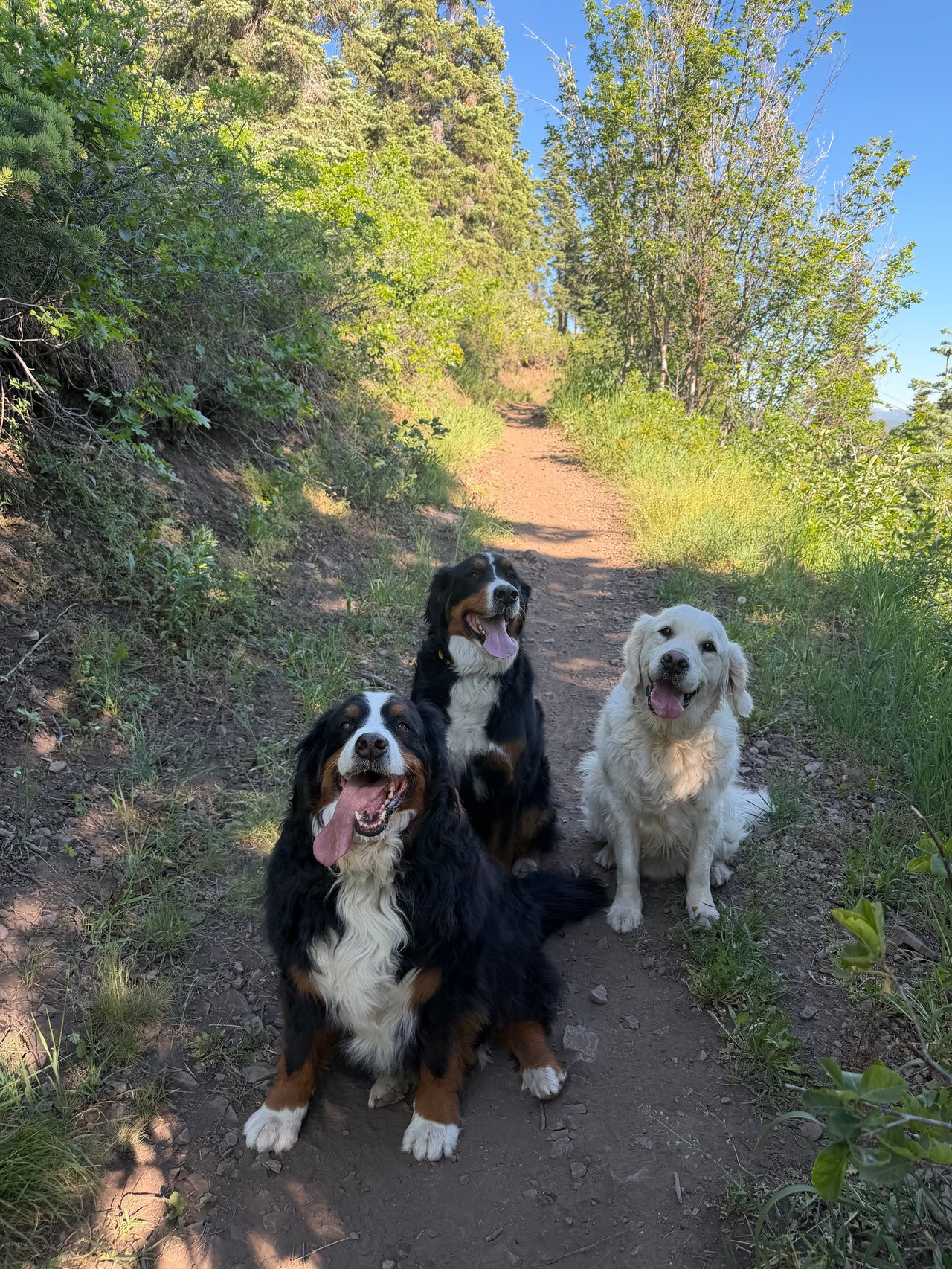
Dog owners should check the rules before heading out. Visit Park City identifies the White Pine Dog Loop near the White Barn as the one dog-allowed section of the network, with dogs on leash. Ski Utah states that dogs aren't allowed on White Pine's Nordic trails, which most likely refers to the main groomed tracks. For off-leash skiing, Round Valley has more than 25 miles of groomed trails, with dogs allowed off leash in designated areas and leashes required at trailheads.
Anyone walking or biking to the course from the Park Avenue side may need a detour. Two McLeod Creek pathway bridges near the Park Avenue Post Office, Fire Station 31 and Creekside Bike Park have been closed since September 23 for replacement. Installation was scheduled for mid-November, with a goal of reopening in December, according to KPCW.
The next Council discussion of the golf course will cover the snowmaking cost, along with the business case and the hole-by-hole design. The figure on the table is Robinson's estimate of $3 million for separate Nordic water lines.
At INHABIT Park City, we follow the projects that shape daily life around Park Meadows, from the fairways off Thaynes Canyon Drive to the trails beyond them. If you'd like to see how the golf course, the McPolin loop and the paths in between fit together, Schedule a Neighborhood Tour and we'll walk the edge of the course with you.
Stay up to date on the latest real estate trends.
Blog
We are committed to guiding you every step of the way—whether you're buying a home, selling a property, or securing a mortgage. Whatever your needs, we've got you covered.