Every Trail Out of Pinebrook Leads to the Same Corner It Always Has
Blog August 13, 2026
Blog August 13, 2026
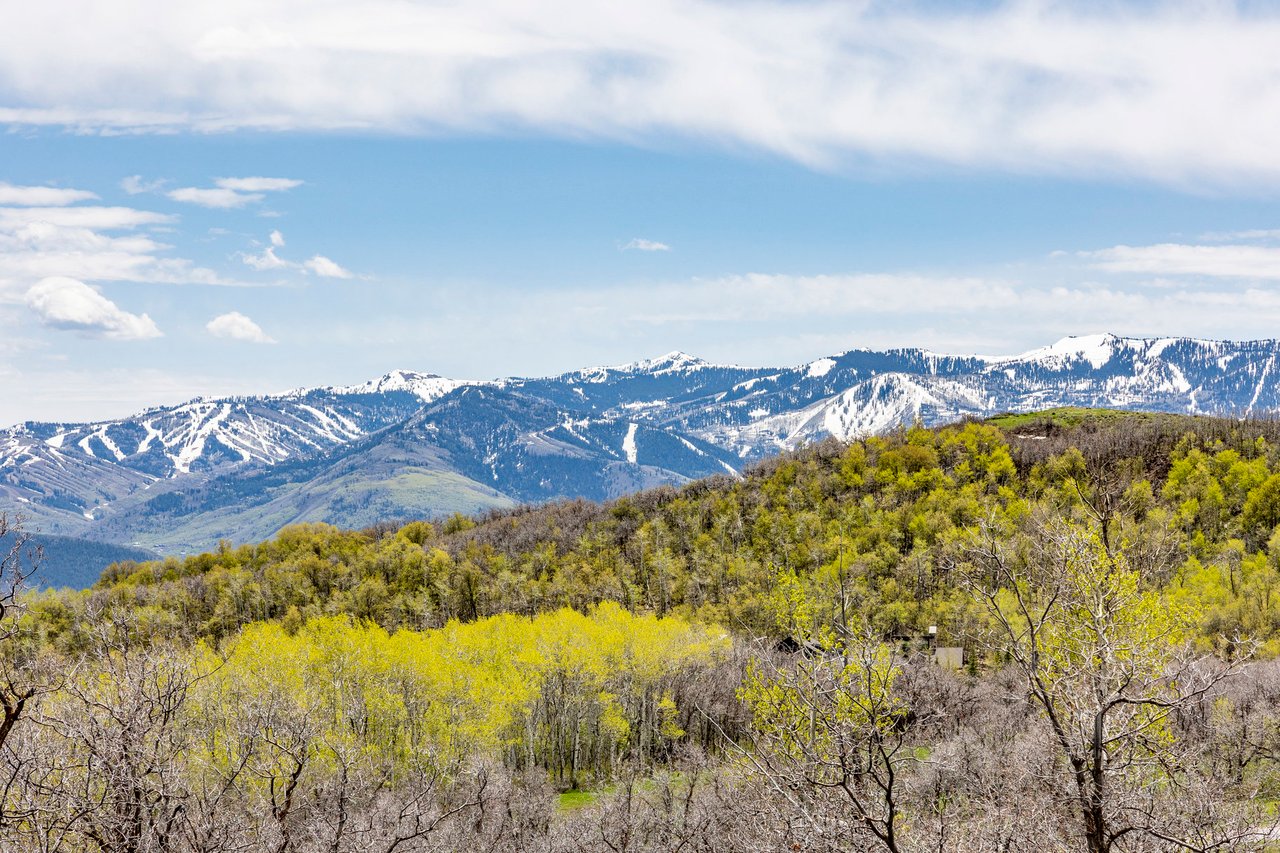
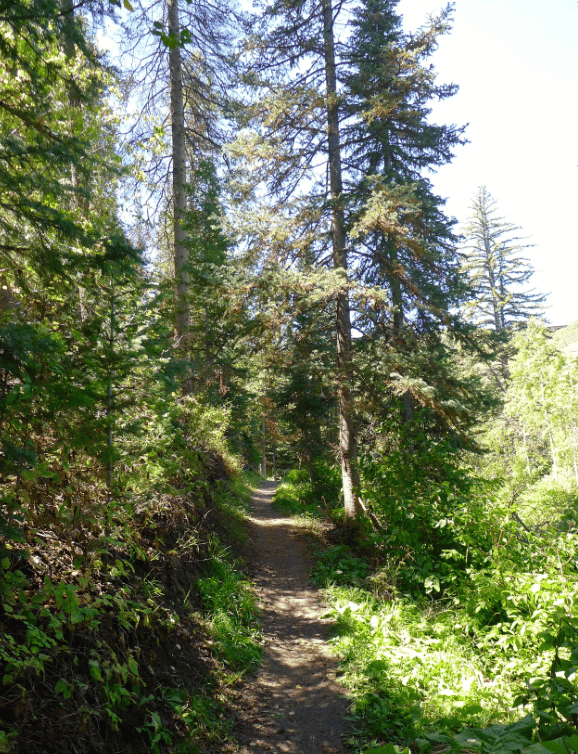
Most evenings after work, someone in Pinebrook clips into a bike, or laces up trail shoes, and heads out from a driveway on Buckboard Drive or Canyon Drive without giving much thought to where the path is actually taking them. The route feels self-evident. Climb through the trees, pick up the singletrack, drop back down toward the roundabout, and end at a table outside O'Shucks with a burger and a view of the parking lot. It is a habit, not a decision. What most people riding or walking that loop do not know is that the ground under their tires has been pulling people toward that same corner for close to a hundred years, long before there was a neighborhood here at all.
Pinebrook's trail system is private, which is part of why it feels so personal. The Pinebrook Master Association maintains roughly 600 acres of open space and a network of perimeter and interior trails built specifically so that most residents can reach singletrack within a few blocks of home. None of it happened by accident. Developers laid down the first sections in the late 1990s, and a Trail Committee formed by the PMA in 2001 has been designing, building, and repairing new segments every year since, using volunteer labor supplemented by a contractor for the heavier work.
Access points are deliberate, too. The PMA has built or designated five trailhead parking areas for members:
From any of those, the network connects outward. Riders coming down from Bear Hollow can pick up Rob's Trail and fork onto the Hunter Trail, which the Mountain Trails Foundation lists as a direct link from the Mid Mountain Trail into the Pinebrook neighborhood. It is one of the few points where Park City's 8,000-foot arterial trail, the one that threads Deer Valley, Park City Mountain, and the Canyons together, actually terminates inside a residential subdivision instead of a resort base.
If you have ever parked at the Gorgoza trailhead by the pond, the name might have registered as scenery and nothing more. It is actually a leftover. Long before Gorgoza was a tubing hill or a trail access point, it was a stop on the Denver & Rio Grande Railroad, and according to the Park City Museum, that stop is exactly how spectators reached Ecker Hill, the ski jump whose monument still stands about half a mile from where Pinebrook Road meets Kilby Road today, according to Summit County's own historical marker page. People rode the train to Gorgoza station and walked from there to watch the jumping.
That detail matters because it means the trail habit residents have now, park at a lot, walk or ride to a gathering point, is not new behavior. It is the same behavior with different transportation.
Ecker Hill was built in the late fall of 1928 by members of the Utah Ski Club, a group made up largely of young Norwegian-American skiers who wanted a proper jumping facility near Parley's Summit. They finished construction by Christmas Day that year and held the first tournament in February 1929. In 1930, Utah Governor George Dern officially named the hill for Peter Ecker, the club's acting president, and for the next two decades it was one of only a handful of world-class ski jumps in the entire country, according to the Utah History Encyclopedia.
Crowds came in numbers that are hard to picture from a quiet Tuesday on the Buckboard trailhead. The encyclopedia's account puts attendance at up to 9,000 people for major meets, gathered on an open hillside in the middle of winter to watch men fly off a wooden ramp. Alf Engen, the best known of the era's professional jumpers, set his longest recorded mark at Ecker Hill with a 281-foot jump in 1934, part of a stretch of years in which he was named National Professional Jumping Champion every season from 1931 to 1935.
A 1937 newspaper account, reproduced by the Deseret News in a 2001 retrospective, captured the mood of those tournaments simply. After one U.S. Amateur Championship event, it noted that "officials had a difficult time getting the skimen to quit."
The hill's use declined after 1949 as jumping technology outgrew it, and it was abandoned entirely by the 1960s. In 1986 it earned a spot on the National Register of Historic Places, and the Pinebrook Homeowners Association later partnered with the Summit County Historical Society and the Park City Historical Society to refurbish the monument that marks the site today, a plaque bearing the names of the roughly 275 jumpers who competed there between 1929 and 1967.
Here is what that history looks like set against a normal week on the same ground now:
Ecker Hill, 1930s | Pinebrook trails, today | |
|---|---|---|
Primary use | Competitive ski jumping | Hiking, biking, trail running, snowshoeing |
Peak crowd | Up to 9,000 spectators for major meets | Handful of neighbors on a weekday evening |
Access | Train to Gorgoza station, then on foot | Car to one of five PMA trailhead lots |
Governing body | Utah Ski Club | Pinebrook Master Association Trail Committee |
End point | The jump itself | O'Shucks, Macey's, or home |
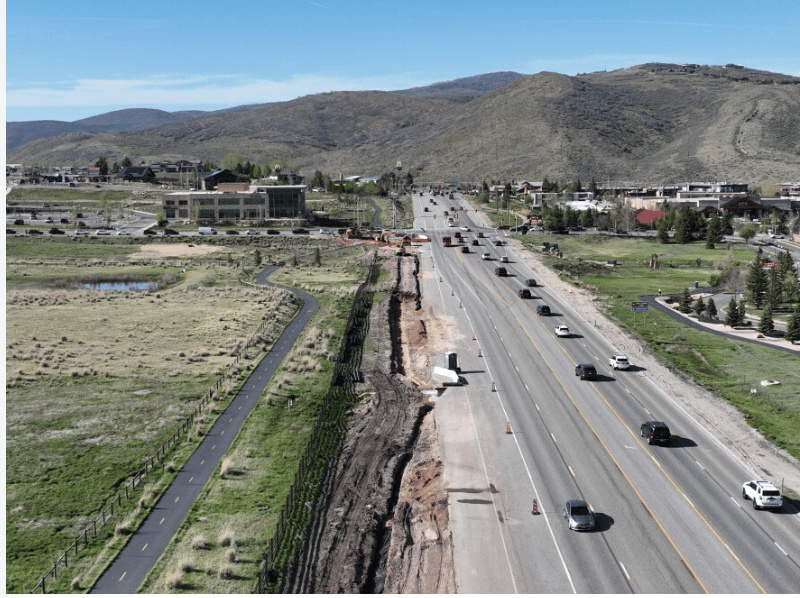
The commercial hub at the bottom of that trail loop, Quarry Village, has not stood still either. In June 2025, the Snyderville Basin Planning Commission signed off on plans for two new buildings on the west corner of the Quarry Village roundabout, the same commercial center that already houses Macey's, O'Shucks, and Ace Hardware, according to KPCW. The commission attached a condition requiring the new construction to match the development's existing architecture, which may mean a sloped roof to fit alongside the rest of the center.
The approved plans call for retail and office suites split between the two buildings, on ground that was, at the time of that June 2025 hearing, still grassy lots on the roundabout's west corner, plus an outdoor green space between the new construction and the building that houses Kodiak Cakes. Quarry Village had also just added a 20-stall Tesla supercharger to its parking lot, a detail worth knowing if you are the one plugging in after a ride rather than after a ski day.
None of this changes the destination. It changes what waits there. The corner residents already treat as the default stopping point for a trail day has been adding capacity, not relocating.
The private nature of Pinebrook's trail system means its upkeep depends on people who live here, not a municipal parks budget. The PMA's Trail Committee, formed in 2001, coordinates volunteers who clear fallen trees, repair eroded sections, and cut back vegetation along the network each season, with the PMA supplying tools to anyone willing to put in the time. It is a quiet kind of infrastructure, easy to take for granted until a washed-out switchback reminds you that someone built the trail you are standing on, and someone keeps building it.
That is the part of the story easy to miss on a routine evening ride. The loop from your driveway to O'Shucks was not always a loop. It was a train stop, a jumping hill, and a crowd of thousands, condensed over ninety years into a five-minute descent most people ride without a second thought.
If you are curious about what else Pinebrook's neighborhood history has left behind, or you just want a local's read on how the Quarry Village expansion might change your regular route, the team at INHABIT Park City spends as much time on these trails as anyone. Schedule a Neighborhood Tour and we will show you the parts of Pinebrook that do not show up on a map.
Stay up to date on the latest real estate trends.
Blog

Blog
Blog
Blog

Blog

Blog
Blog
We are committed to guiding you every step of the way—whether you're buying a home, selling a property, or securing a mortgage. Whatever your needs, we've got you covered.